Magic 501: Henosis
I’ve been listening to Dr. Justin Sledge’s Youtube channel “Esoterica” of late, as background noise while I do other things.
I’ve been struck, on and off, by commonalities between very ancient heathen (Greek, Egyptian) practices and some of the magical aspects of vodou I have learned. It is not surprising—the roots of vodou are religions in Africa which long predate even the Greek civilizations, and Egypt was already ancient when the Greeks began to borrow magical knowledge from them and document it in papyri.
All of this is to say that there is no particular “purity” in tradition. People get around, and people talk, even about sacred practices. Cultures have been borrowing magical ideas from each other as far back as we can find evidence of cultures. The consistency of certain magical practices just makes it clear that the spirits have been speaking to people for thousands of years and telling them how to communicate and manipulate the environment.
What people have made of it, though, differs wildly. Vodou has no need for a ‘salvation’ schema, in part because we do not view nature or existence as inherently negative (evil), nor do we view the various hardships of existing as being something which pulls someone away from deity. Even the negative spirits or experiences are part of the path to god.
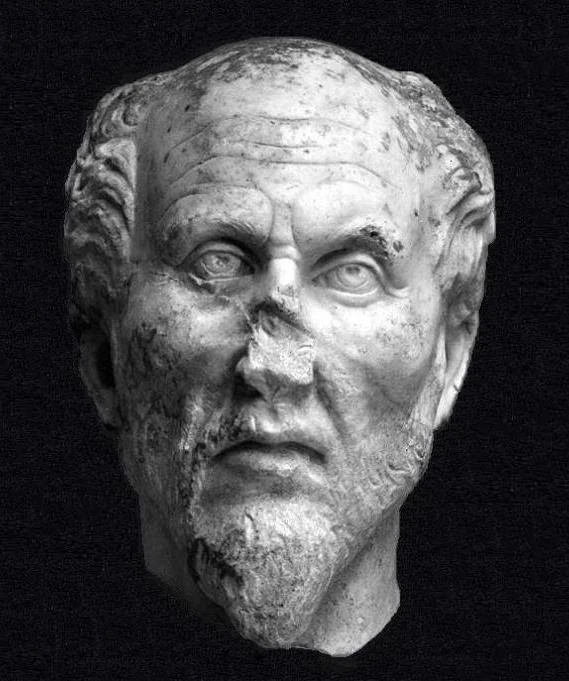
The way I have spoken of deity and of magic reflects the idea of oneness, and at least partially reflects henosis—a term and set of ideas I’d never heard of before. The wikipedia article summarizes the stages of henosis, which I see echoed in the process of healing.
We routinely, in vodou, see people in need of catharsis. They are tortured by themselves, by negative entities, by their connection to ego, by their memories, by their ideals or desire for a conformity they cannot reach, etc. Our spirits come and scream with us, Danto grabbing someone by the shoulders and letting loose the keening scream of someone dying to torture, echoing the sounds someone would make if they could. They scream for us until we can scream ourselves ragged, the screams we would have made at the time, if we could. We pull negative entities from people and strengthen their souls to prevent them from being recaptured. We provide purifying baths or teas, remove the hostile dead from places, or otherwise act to purify, sanctify, and/or purge the environment and the people in it.
The next stage, we also see. There is no inherent tension between the intellect and intuition—the problem lies in misunderstanding. Not all situations need the intellect, logic, and the consciousness to be understood. The consciousness, intellect, and logic are tools to an end, though they are represented in culture as the only possible, reasonable, non-crazy way to knowledge or understanding: the good to the evil of things like intuition, instinct, or (to some degree) creativity. Anything that cannot easily be explained by reason. Yielding the role of intellect to the role of tool, as opposed to the only means by which things may be known, allows other forms of guidance to be heard, other methods for knowledge to be used. This is, itself, a kind of death. Catharsis happens properly when we are willing to die to the desire for emotional separation. This stage happens when we are willing to die to the desire for intellectual separation, the need and comfort of dividing things into categories.
Once the intellect is a tool and the various emotional or spiritual blocks or distractions the person is experiencing have been removed or resolved, the person can begin to see themselves. They get ecstatic glimpses of their divine nature, of their connection to others, and of the many parts of their own nature. These are glimpses. The person is not yet at the point where their vision is consistent, only at the point where they begin to see. These visions of the self and connection are motivation, but also prophecy: they are a reminder of what lies ahead and a demonstration that something does lie ahead, to remind the initiate during the next stage that the annihilation has an ending.
This stage gets referred to as ‘ego death’ in a lot of literature. In vodou, this is the stage where the connection with ego is finally resolved. It is as painful as the word ‘annihilation’ suggests. Nothing of who the person was survives this—what emerges from the destruction is the divine nature. All else is peeled off, burned away, dissolved agonizingly.
The last stage, union, is the idealized goal of healing and elevation processes, but is not achievable in a single life. This is where vodou most significantly differs from the described process of henosis. There is no single-life shot through all these processes, nor is there a hierarchy of being. All there is, is entities who are a bit further along than you. It is achievable, over the course of lives and a lot of very uncomfortable processes which are not entirely up to the discretion and choice of the person.
It amuses me to see the parallels, and to see various ritual words and phrases with shared features. There is no particular benefit in trying to assert who had the idea first—that sort of competition rightfully belongs outside spirituality—but it is enjoyable to see that the spirits have been around, discussing ways to interact with their world, with humanity about as long as we have evidence of humanity.