Magic 501: The Balance and Perfection
Balance is one of the virtues in vodou, one of the precious few qualities we aspire to across different houses. Not every house, etc, but it’s a fairly consistent quality taught in vodou alongside what could be called maturity.
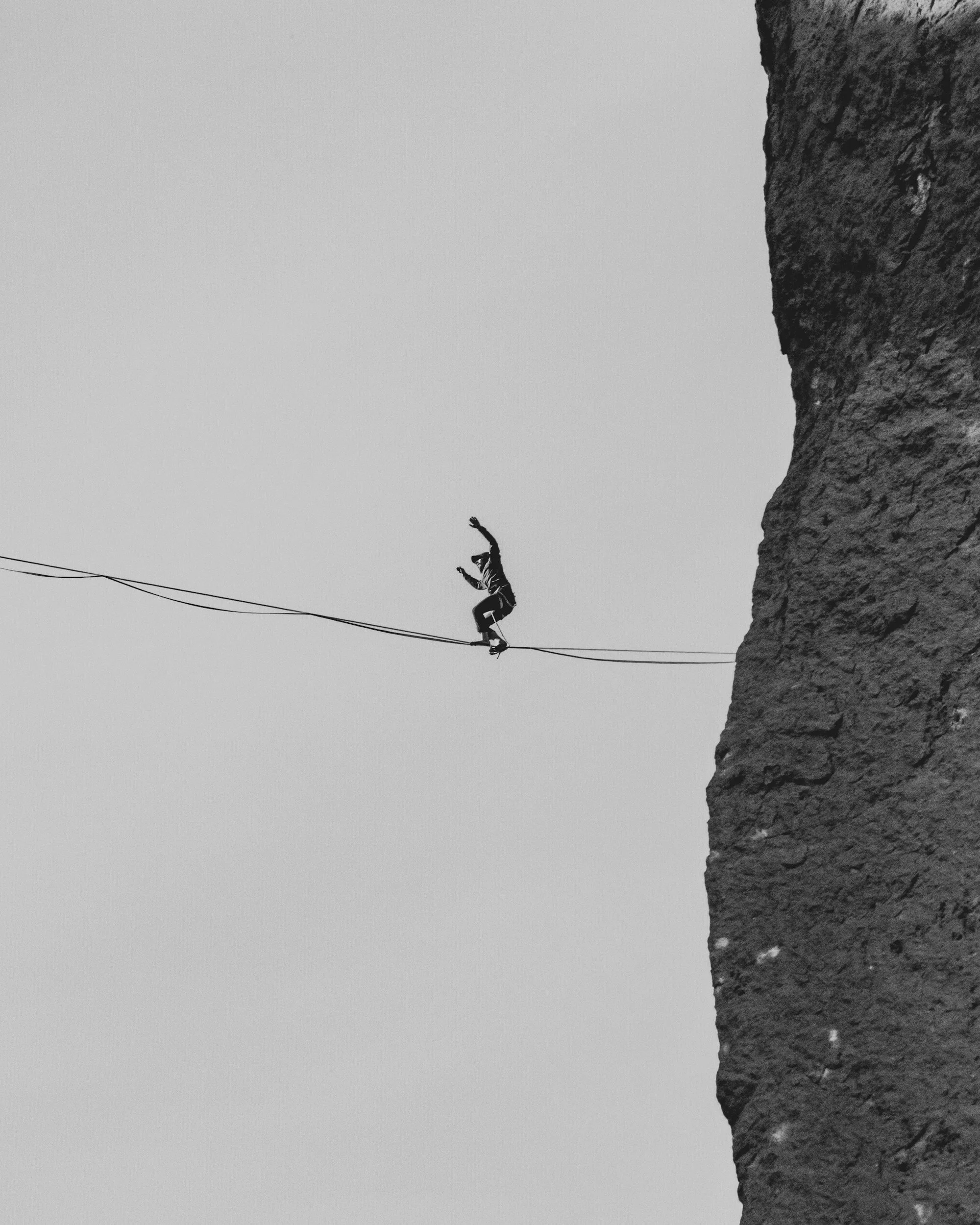
Leadership is a tightrope over a minefield. Any imbalance we have will tip us into a landmine: the attachments of ego, our various cultural or personal biases, where we are ignorant or lack foresight, etc. Our lwa do not expect perfection, just the strength necessary to get up and crawl on, and the necessary commitment to avoid falling into the same landmine repeatedly. They expect us to learn.
People expect perfection. Our spiritual children, of course, will demand perfection but that reflects their immaturity and causes less problems than our expectations of ourselves. It’s easy enough to want to do a ‘good’ job of leadership, to want to give your children everything you can or to give them the best you can. Most leaders will have that motivation. Interpretation is a bit of a bitch here, in terms of what that means to any particular leader, but it’s a fairly common desire. It’s easy enough to resolve to be the right leader.
The problem, of course, is in the burden of restriction that puts on the person. Perfection is a trap—the desire to try and be perfect, even the desire to be good, always inspire dishonesty. We are not what we aspire to be, and the performative nature of trying to be what we are not is itself a lie. We lie to ourselves, and we put on a false face for others trying to reach it. No precautions, no disciplines can prevent that from occurring. What is based on a lie, even a lie we tell ourselves, is a lie we will reproduce. We watch ourselves, curate ourselves, try to be the best version of ourselves we can, and in doing so start the tedious act of performance, which blows up in our faces.
Also a problem is trying to be deliberately not good, or to be deliberately anything. Premeditation and the distance it introduces will always end in some sort of self-deception, which will tip us right over into a landmine. The good news is, after falling into enough of them, you realize you aren’t dead yet and can try again. This is, itself, a lesson.
The objection which is often made to removing that layer of self-censoring for people in leadership is what we could do, if we weren’t watching ourselves—part of that balance is knowing that the landmine won’t (usually) kill you and people are resilient, but that what you have to give people is what you have to give at the time. Trusting yourself enough to be yourself, to know that you will learn from landmines, that your children can also benefit and/or recover from a landmine, and that you can be trusted to do whatever you find best in any particular situation is itself part of that balance. This is the inner balance which facilitates the outer balance.
If, as a leader, you think of yourself as having to manage your relationships with your children, that inner balance is not reached yet. Whether fear of loss of reputation, fear of your own capacities, fear of losing the love of your children, or just fear of engagement, something is not yet matured or balanced.
Trust in your spirits to discipline what you have not yet changed, trust in yourself to learn and change, trust that you will and do strive for balance, trust in your children: there is no foundation for balance and maturity without those things.