Magic 501: The ‘Dark’ Lwa
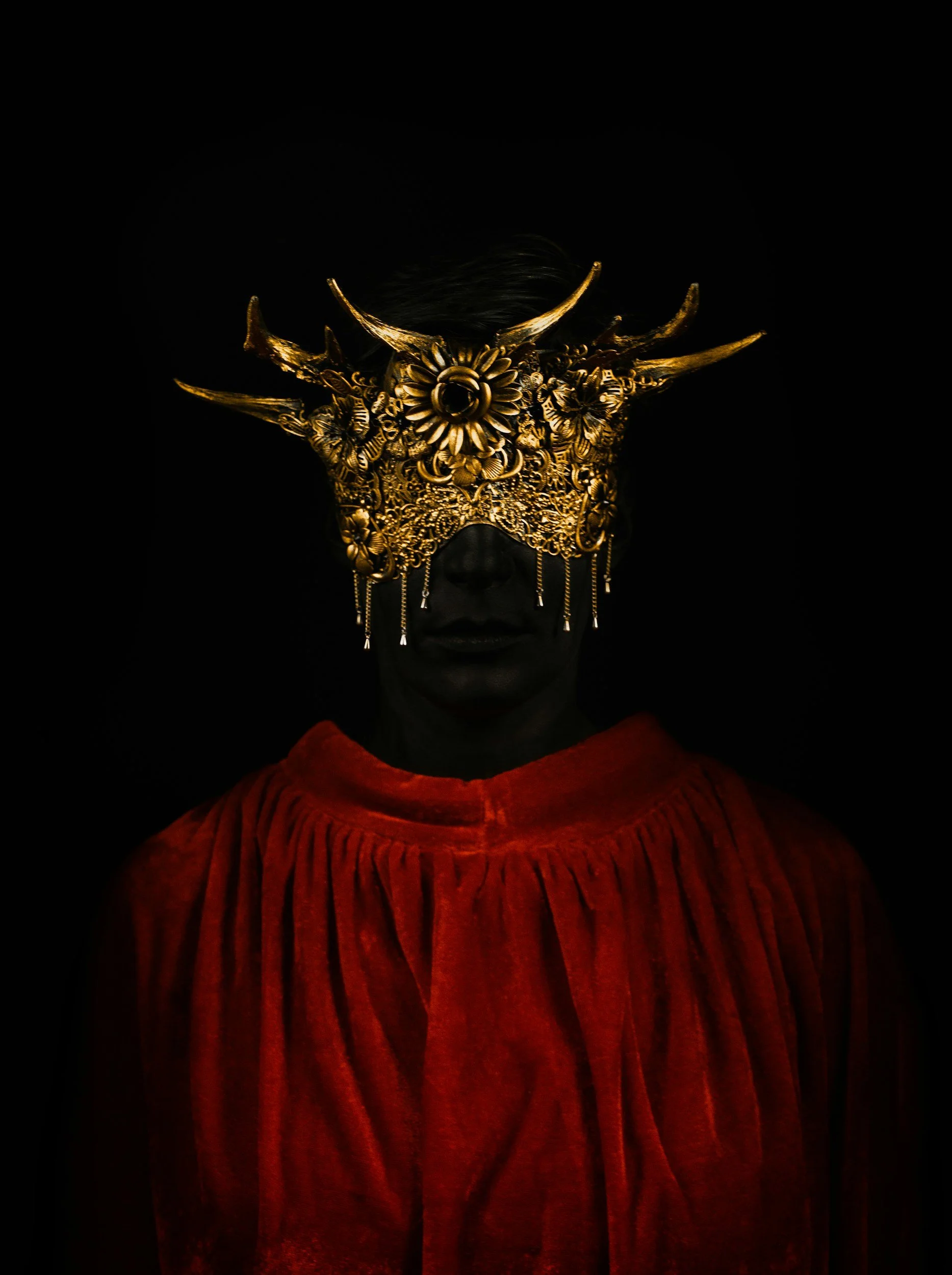
In various online spaces where vodou is discussed, people often talk about the evil or dark lwa and the good lwa as if there is a clear distinction between the lwa who only do things they think are good and the lwa who only do things they think are evil. This typically coincides with people declaring themselves and their temples/societies/soyestes to be only good, and sometimes decrying other people and/or their temples/societies/soyestes to be only evil.
In my opinion (as opposed to broader consensus) if the person is sincere, this is an example of colonization in vodou—the idea that divinity is cleanly divisible on criteria that more or less corresponds to a shallow, cultural reading of one of the religions of the book (Christianity, Islam, Judaism). The category divinity belongs to, in this interpretation, corresponds to the idea that one’s life is singular, that there is neither reincarnation of any kind nor any way to try again to learn lessons sent for personal development. If life is singular, anything which concerns death must be evil: it’s an end to the only chance you’ll get to learn spiritual lessons, grow, mature, and/or heal. Any deity which concerns death or endings is, for that reason, evil.
This belief is, whether sincere or not, also political. It is the deliberate attempt to align vodou with the more politically powerful religions of the book, and particularly in US online spaces, Christianity. It’s often defensive. After all, the religions of the book tend to view vodou as irredeemably evil, having no other purpose but to kill or harm. People who live in cultures where the religions of the book are politically powerful and who love the vodou they practice often feel the need to defend it from the more politically powerful religions.
For that reason, it’s also marketing. No shade to spiritual marketing, we all have to make a living.
All the shade, however, to the idea that the lwa come in the flavors ‘good’ and ‘evil.’ My initiator is fond of saying that everything serves god one way or the other, which I have found to be true. Even the things which are generally considered ‘evil’—things concerning death or endings, for instance, serve the all. The question is how, and the answers have just as much variety as the word ‘all’: in every way.
Specifically for the ‘evil’ lwa and speaking again from experience, every thing that exists needs some set of forces which act like garbage collection, to remove things which have gone stagnant, to end things and to recycle their components. Not every situation is ended cleanly, nor nicely. Not every situation is clean or nice. People in online vodou spaces seem to be fine with the Guede or black division, but get nervous when people start talking about the Petro or red division, the spirits which came out of the Haitian revolution. Dead is fine. The Nago division, which contains many spirits of war and the military, is also fine. Things that cause death, however, make people itchy.
If you do a variety of work with Baron, that’s a bit of a specious distinction. You can take people to the graveyard for a variety of purposes, some of which cause death and illness.
It gives me a bit of a headache when I hear priests echoing the idea that there are good and evil or light and dark lwa. That is their vodou. I simply, as a priest who spends a fair amount of time working with Petro spirits, know myself and a variety of lwa to be unwelcome in their vodou. This is their prerogative, even if I dislike it, and if they are operating from it, this is how they and their children need to understand god.
In my experience, god has no problem working through spirits whose domains include violence or who use violence as a tool. The all contains the all, which definitely includes spirits and behaviors which make everyone else itchy.