Magic 501: The Royal ‘We’
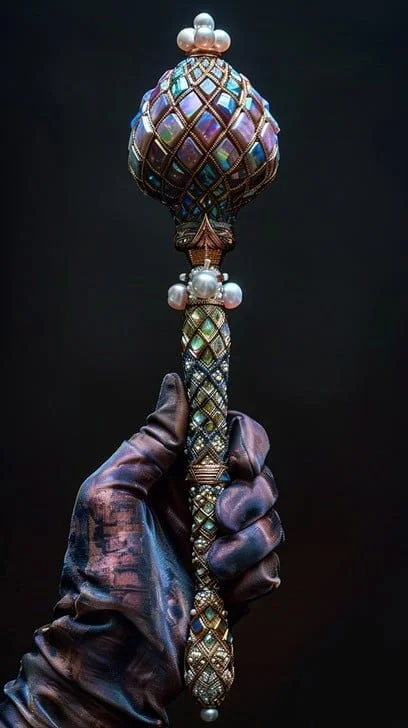
A priest is the thing people can see. They can’t see the divine, they typically can’t see the lwa when they aren’t in possession, but they can see a priest. We’re there to be seen, blamed, loved, praised, hated, etc: all the things people can’t or won’t aim at the spirit, in addition to the more positive energy of a spiritual relationship.
People can be forgiven for confusing the spiritual body of their society with the physical body of their priest. It is part, explicitly, of the agreement priests make with the spirits to do the job of being a priest. We represent, but that does not mean we’re what someone wants to have representing the spirit. The lwa choose their own.
In practice, though, this can be a problem for the priest. If a priest is who people think of when they think of the spirit, they will often project characteristics of the priest onto the spirit and vice-versa. It can be easy to form a cult of personality if a single priest is responsible for many people who are not willing to pursue or capable of pursuing their own relationship with the spirits. People will often try to delegate the work of having a relationship with the spirits to a relationship with the priest—why bother with something you can’t see or feel directly (depending on the capacity of the person) when there’s someone you can see and interact with in front of you? You can get to know a priest, or to know them well enough, and then you don’t have to deal directly with the spirit. You can just complain at the priest.
The spirits often make people very, very uncomfortable.
One of the best ways to deal with this directly is to know (and remind people) that in essence, being a priest is co-parenting. A priest is a co-parent with the spirits of the person they serve and their own court. Priests administer the instructions, the treatments, interpret the dreams or messages, etc for their spirit co-parents, providing whatever capacities that person lacks. And much like co-parenting in real life, there is an active exchange of messages, ideas, and direction between priest and spirit.
There is, quite literally, a ‘we’ in the decision-making of priests. It’s a royal ‘we’ for the people they serve—it will be disobeyed at your own risk, but it is not so much an individual voice as it is the chorus developed between the priest and the spirit. Ideally, the priest does more listening than otherwise in that chorus, providing a faithful channel for the spirits. Not everything the spirits say needs to be repeated to the people we serve, just as not every conversation between co-parents needs to be the business of the children, the parents merely have to act in the best interests of the children.
The fact that it is co-parenting means that there is accountability between parents, a fact that is often lost on the children. The cost of the royal ‘we’ is the fact that, if a priest behaves in a way one of those parents finds irresponsible, it will incur consequences on behalf of the children. Children do not, typically, see those consequences. As is true of mature adults in co-parenting situations, when there are problems between parents, it is often handled away from the children so that they are not unduly stressed by those consequences. It is easy for children to look at the expressed authority of a parent, or a priest, and only see the demand to obey and not the web of accountability that characterizes that relationship.
There is no presumption of obedience in vodou that does not entail accountability. It just isn’t accountability to the children.
It’s accountability for the children.