Vodou 501: Solve Et Coagula
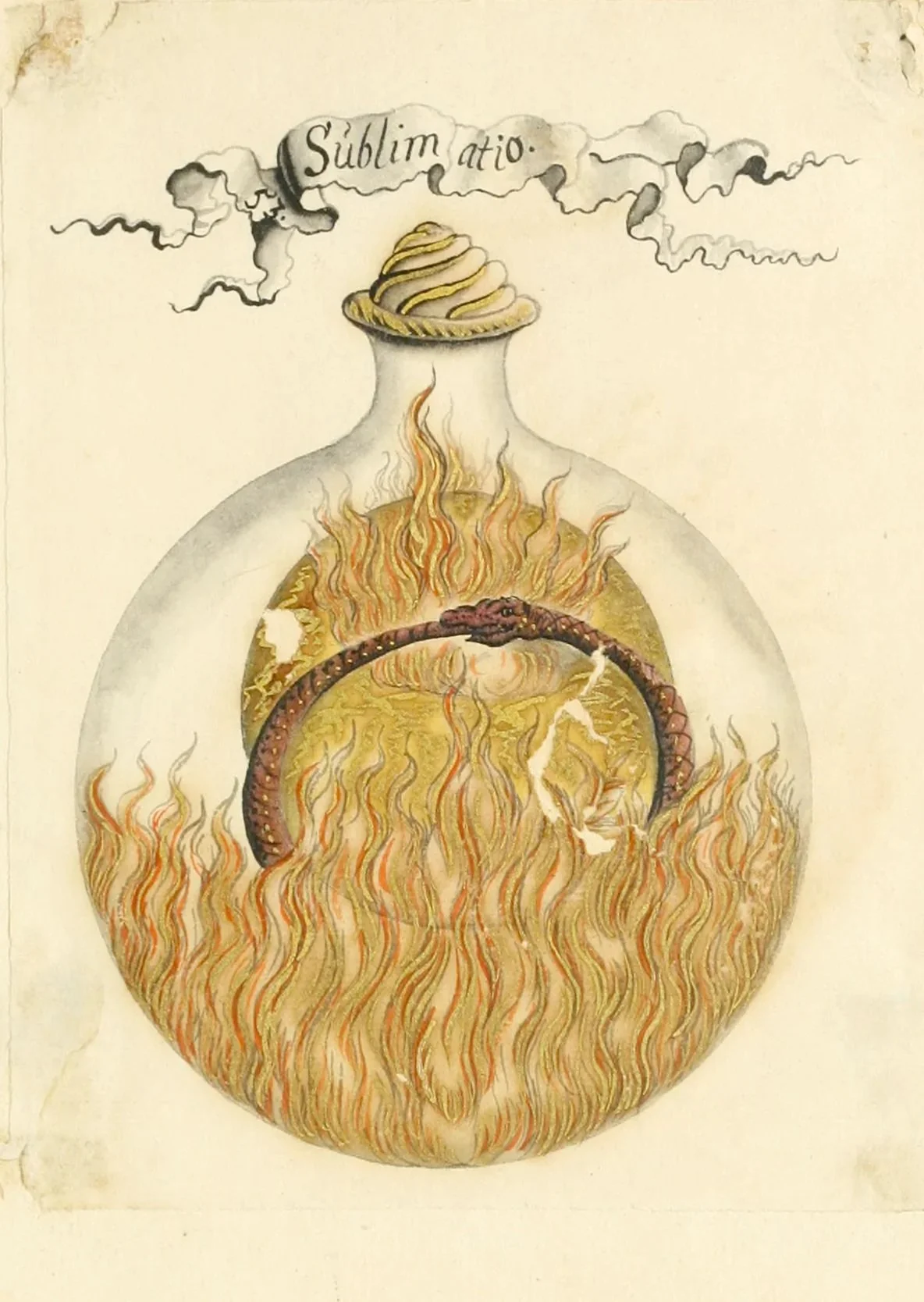
In English, “dissolve and coagulate”. Apart and together: the motto of Medieval alchemy and later by Eliphias Levi and Alastair Crowley.
The “and” part of that sentence is doing most of the work, and is where it intersects with vodou. Famously, this phrase is used to refer to the union of opposites, or the idea that something composed of seemingly opposing ideas contains and invokes wholeness. It’s not infrequently used, as a concept, by people trying to experience the mystical, as if taking any two sufficiently opposing things and mashing them together is enough to characterize a master magician (or make one.) The idea is not, itself, enough for transformation in the same way that the idea of a can opener does not open a can.
I prefer to think of solve et coagula as a side effect of the divine’s presence. Where the divine is facilitating change or transformation, all that exists in the situation is a part of that all. Those opposites are a part of the situation, and where the divine’s presence is particularly clear to the viewer, the various opposites a situation can hold will be distinct without dissonance: a moment of sanity and clarity.
This is a place where the consciousness does not help—the consciousness tries to encompass, to summarize, and to render that all a bit more comfortable or palatable. It tries to categorize the situation, severing the connection between the parts of a situation to make it smaller and to justify itself. Consciousness is always seeking to justify itself, to make arguments that it is a vital tool and its interpretations are the only way we can avoid the distress of a nonsensical world. All things uncategorized, un-summarized are uncomfortable. They are chaos and the consciousness fears them.
The consciousness fears god for that reason, and must try to make god smaller. It must build god temples, write god books and laws, must do whatever it can to defend itself from god, to hide from the all in the stone walls or fragments of reality inside the written word.
The consciousness cannot know god. It does not possess the necessary sanity. It divides and discerns. These are necessary tools for the process of learning, but unlike the way consciousness presents itself and those capacities, they are only tools. And while it and the rest of the soul are divided from each other, the person cannot know god.
God can be known by the whole of the soul. God can be known by god. God transforms god.